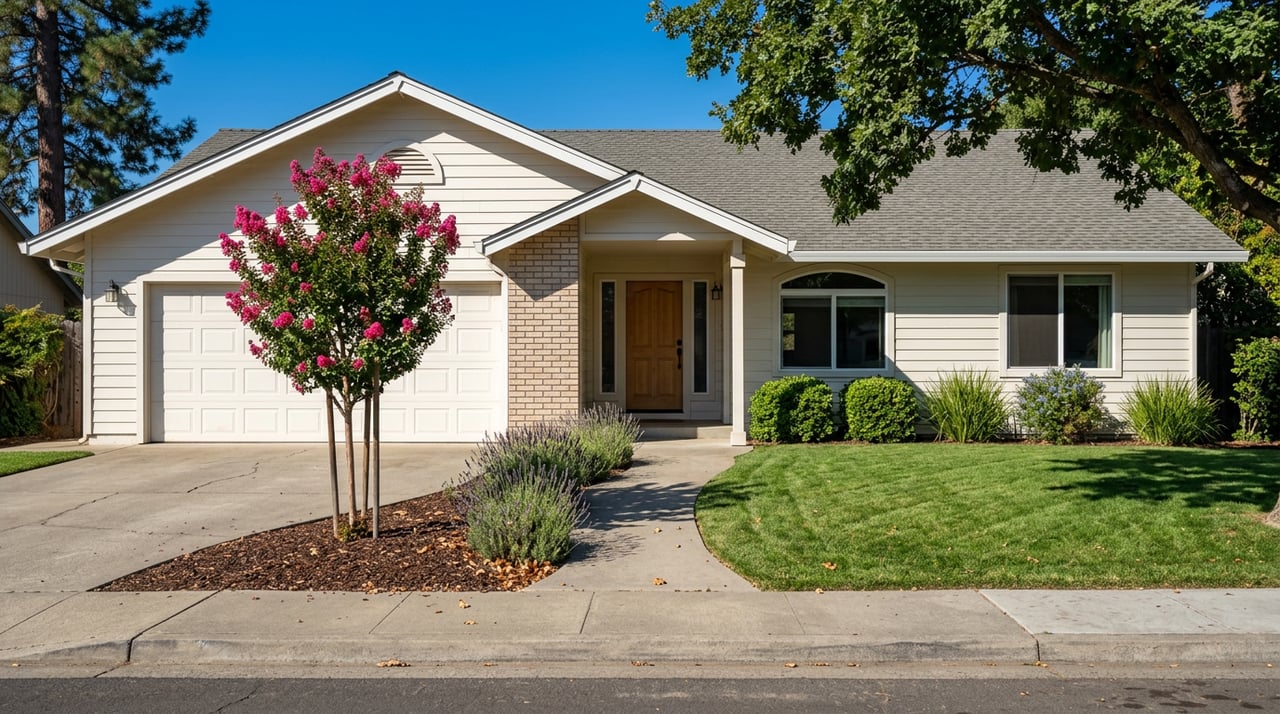
Thinking about more space, a different neighborhood, or a yard that fits your next chapter in San Rafael? Trading up can feel like solving a puzzle with moving parts: timing, financing, taxes, and contract deadlines. You want a clear plan that protects your equity and positions you to win the right home without unnecessary stress. This guide gives you a step-by-step game plan tailored to San Rafael and Marin so you can move up with confidence. Let’s dive in.
San Rafael market snapshot: why timing matters
San Rafael’s market has been steady with a median sale price around $1.075M as of early 2026 and longer median days on market than a year ago. Across Marin, county-level reports show a median sold price near $1.273M and months of inventory around 3.1. Limited supply still gives well-prepared sellers leverage, and many listing agents prioritize certainty from buyers. That is why your approach to timing and financing is central to getting your next home.
Start with your numbers: equity and net proceeds
Before you choose a path, estimate your net proceeds. That figure shapes your down payment options and the type of offer you can write.
- Equity formula: current market value minus your outstanding loan balances equals gross equity.
- Net proceeds: sale price minus selling costs and mortgage payoff equals cash you can bring to your next purchase.
Here is a quick example to show the math:
- Estimated sale price: $1,150,000
- Commissions: budget roughly 5–6% of the sale price
- Transfer taxes: Marin County documentary transfer tax is $0.55 per $500 of consideration and the City of San Rafael adds a municipal component currently noted as $2.00 per $1,000. Always confirm the current municipal rate and how your contract allocates this cost. You can review the county fee schedule on the Marin Assessor-Recorder site at the county’s page on fees.
- Escrow, title, and recording: plan for standard seller costs, including the owner’s title policy and payoff-related fees.
- Mortgage payoff: use a current payoff statement from your lender.
Sample net sheet:
- $1,150,000 sale price
- Less $63,250 in commission at 5.5% (illustrative)
- Less approximately $1,265 in county tax and $2,300 in city transfer tax (illustrative based on the current schedule)
- Less $6,000 for typical escrow/title/recording (varies)
- Less $450,000 mortgage payoff
- Estimated cash to close: about $627,185
These numbers are examples. Ask your escrow officer for an itemized estimate so you can plan with precision. For federal taxes, many owner-occupants who meet the ownership and use tests can exclude up to $250,000 of gain if single or $500,000 if married filing jointly. Review the rules and worksheets in IRS Publication 523 so you apply the exclusion correctly.
If you are eligible under California Proposition 19, you may be able to transfer your prior base-year value to a replacement primary residence, which can reduce your future property tax bill. Learn the eligibility and timing rules from the State Board of Equalization’s Prop 19 guidance.
Choose your move-up path
Each approach has benefits and trade-offs. Your equity, risk tolerance, and the competitiveness of your target neighborhood help determine the best fit.
Sell first, then buy
- How it works: you list and close on your current home, then use the proceeds to purchase your next home.
- Pros: lowest cashflow risk, no need to carry two loans, and no bridge fees or interest.
- Cons: you may need short-term housing if closing dates do not align, and you could face more competition if you must buy quickly after selling.
Buy first with a sale contingency
- How it works: your purchase offer is contingent on selling your current home by a specific deadline.
- Pros: protects you from carrying two homes and gives you time to sell.
- Cons: in many Marin submarkets, sellers prefer non-contingent offers. Contingent offers often need sharper pricing or stronger terms to compete.
Buy first with short-term bridge financing
- How it works: a bridge loan lets you tap equity in your current home for the down payment on your next home, then you repay the bridge when your current home sells. Typical terms are short and often interest-only. Get a feel for how these loans work from a lender’s overview of bridge loan mechanics.
- Pros: enables a stronger, non-contingent offer and often allows a single move.
- Cons: higher fees and interest than a standard mortgage, and you may carry two payments if your home takes longer to sell. Lenders will look for solid equity and reserves. Run a conservative 6–12 month carrying-cost scenario before proceeding.
Tap equity: HELOC or cash-out refinance
- HELOC: flexible access to funds with generally lower upfront costs. You keep your existing first-mortgage rate, but HELOC rates are variable. Review pros and cons in this explainer on HELOCs.
- Cash-out refinance: replaces your existing mortgage with a larger fixed-loan and provides a lump sum. It can make sense if you want long-term borrowing and are comfortable resetting your rate and term. Compare trade-offs in this guide to cash-out refi versus HELOC.
Practical tip: if your current rate is very low and you need short-term cash, a HELOC can help you avoid replacing the first mortgage. If you need a larger, long-term lump sum and the numbers pencil out, a cash-out refinance may be better. Always compare lender quotes side by side and model your break-even timeline.
Other timing tools
- Rent-backs and post-closing possession: negotiate a short leaseback so you can close, then move once your purchase is ready.
- Appraisal-gap language: some buyers agree to cover a capped shortfall if the appraisal comes in low. Understand how appraisal contingencies work and the risk to your deposit if you waive or limit protections.
- Private carryback: rare, but sometimes a seller-financed second can solve a timing gap.
Contract timelines and local mechanics
Contingency windows in California
The California Residential Purchase Agreement sets default windows that are often shortened in competitive offers. Inspection contingencies commonly start at 17 days, and loan and appraisal contingencies often run 17–21 days, subject to negotiation and lender speed. Learn how these timelines function and why a Notice to Buyer to Perform matters in this overview of California contingency practice.
Typical escrow lengths
In the Bay Area, financed escrows often run about 30–45 days. Cash purchases can close in 7–21 days if title and disclosures are ready. HOA document retrieval, appraisal delays, wildfire insurance, and title defects are frequent pacing items. Ask your lender for a realistic underwriting timeline before you write an offer.
Local inspections and disclosures to plan early
- Sewer laterals: Several Marin agencies require a sewer-lateral video inspection or compliance on sale. Check the San Rafael Sanitation District’s sewer lateral guidance and budget for repairs if needed.
- State disclosures: California’s Natural Hazard Disclosure and Transfer Disclosure Statement are required. Pre-inspections and complete disclosure packages help reduce last-minute renegotiation and keep escrow on track.
Insurance and wildfire readiness
Insurance availability has been shifting in California, especially for homes near wildland areas. Private carriers may limit coverage in certain zones. The FAIR Plan is a backstop if you cannot obtain private coverage, often paired with a Difference in Conditions policy for broader protection. Get quotes early and review current consumer alerts from the California Department of Insurance so you understand timing and options.
Decision matrix: which path fits you
Use these quick checks to narrow your plan.
- Equity threshold: if you have about 20–30% equity or more and can handle reserves and possible overlap, a buy-first plan with a bridge loan can be workable. If equity is thinner, selling first or writing a carefully structured sale-contingent offer is usually safer. Review typical bridge-loan rules and lender expectations.
- Market heat: if your target neighborhood often sees multiple offers and sale contingencies get rejected, focus on strategies that create a strong, non-contingent offer, such as bridge funds, a HELOC-assisted down payment, or full loan pre-underwriting.
- Insurance feasibility: pre-shop insurance. If a property needs FAIR Plan plus a wrap policy, plan for underwriting time and lender approval.
- Loan sizing: many move-up purchases in Marin exceed conforming limits. For 2026, FHFA’s baseline conforming limit is $832,750 and the high-cost ceiling is $1,249,125. Loans above that are typically jumbo with different guidelines and timelines, so coordinate early with your lender.
Your step-by-step game plan
- Clarify goals and must-haves
- Define your budget band and the neighborhoods that fit your lifestyle, commute, and daily needs.
- Decide whether one move is essential or if a short-term rental works.
- Get a current valuation and payoff figures
- Ask for a detailed CMA for your home and request a mortgage payoff statement.
- Run best-, base-, and conservative-price scenarios.
- Build your net sheet
- Include a 5–6% commission estimate, Marin County and City of San Rafael transfer taxes, typical escrow/title/recording, and your mortgage payoff.
- Verify transfer-tax formulas on the county’s fee page and confirm any municipal updates with escrow.
- Map your financing paths
- Compare a bridge loan, HELOC, and cash-out refinance. Request written term sheets that include required reserves, combined loan-to-value limits, fees, and estimated monthly costs. Start with a lender overview of bridge-loan mechanics, a HELOC explainer, and a cash-out vs HELOC comparison.
- Run a worst-case overlap of 6–12 months to pressure-test your comfort.
- Pre-underwrite and prep your listing
- Secure full lender pre-approval with documentation to accelerate underwriting.
- Order a sewer-lateral video where applicable and address high-likelihood repairs early using the San Rafael Sanitation District guidance.
- Assemble your disclosures and consider pre-inspections to speed buyer decision-making.
- Decide offer structure and timelines
- If going non-contingent, align your close dates and negotiate a rent-back if needed. Put clear possession terms in escrow instructions.
- If going contingent, set realistic contingency periods that match your lender’s speed. Understand appraisal contingency options and the risk of offering an appraisal-gap contribution.
- Execute and monitor the clock
- Track contingency removal dates, appraisal scheduling, HOA turnaround, title updates, and insurance placement.
- Keep your net sheet updated as credits, fees, or dates change.
Final thoughts
Trading up in San Rafael is absolutely doable with the right plan. Start with clear numbers, choose a financing path that matches your equity and risk comfort, and set timelines that your lender and escrow can hit. Small steps taken early — like ordering a sewer-lateral video, pre-underwriting your loan, and pre-shopping insurance — can remove friction and strengthen your offer when the right home appears.
If you want a local, hands-on guide to map this move in detail, reach out to Jennifer Bowes. From pricing strategy and Compass Concierge preparation to tight contract management, you will have a clear, step-by-step path to your next Marin home.
Ready to plan your move-up? Connect with Jennifer Bowes for a friendly, no-pressure consultation.
FAQs
How do San Rafael transfer taxes affect my net proceeds?
- Marin County collects $0.55 per $500 of consideration, and the City of San Rafael adds a municipal component currently noted as $2.00 per $1,000. Confirm current rates and contract allocation with escrow and review the county fee schedule on the Marin Assessor-Recorder site.
What is California Prop 19 and can it lower my taxes after I move?
- Prop 19 allows eligible owners, including those 55 and older, to transfer a prior base-year property tax value to a replacement primary residence subject to rules and timing; review eligibility and filing steps on the State Board of Equalization’s Prop 19 page.
Is a bridge loan a good fit for a move-up purchase in Marin?
- It can be if you have strong equity and reserves and want a non-contingent offer; understand terms, higher fees, and overlap risk by reviewing a lender overview of bridge-loan mechanics and modeling a conservative holding period.
Which inspections should I order before listing in San Rafael?
- Start with a sewer-lateral video where required by local agencies, then assemble standard California disclosures and consider pre-inspections to surface repairs early; the San Rafael Sanitation District outlines sewer-lateral steps.
How long does escrow usually take in Marin County?
- Financed escrows often run 30–45 days and cash escrows can close in 7–21 days if title, disclosures, appraisal, insurance, and HOA packages are ready; confirm your lender’s underwriting timeline before you write.
Will I need a jumbo loan for my move-up purchase in San Rafael?
- Many purchases exceed conforming limits; for 2026 the FHFA baseline is $832,750 and the high-cost ceiling is $1,249,125, so loans above those amounts are typically jumbo with different guidelines and timelines.